There is a 40.1%chance "InnoCentive" will be the answer.
About
The traditional way of developing capacity has focused on training organizational volunteers and employees in techniques designed to strengthen managerial systems. This focus on optimizing management systems and practices—not impact—has produced disappointing results.
This can best be described as a managerial approach to capacity development, or Capacity 1.0. The Capacity 1.0 organization has strong systems in place, is well managed, and is able to respond consistently to the everyday challenges it faces. It operates with high efficiency and accountability. However, Capacity 1.0 organizations are not necessarily gifted at creating and maintaining a “can-do culture” of committed volunteers and staff who collectively achieve fundamental, far-reaching, and sustainable social change—particularly in response to challenges arising from new contexts.
Increasingly, organizations must address complex, novel challenges for which tried and true solutions are either unavailable or of questionable utility. Consider, for example, the outbreak of a new pandemic; “natural” disasters that stem from population pressures and unsound environmental practices; and unmet humanitarian needs due to a global recession. The organization that can deal with such issues effectively has much more in place than sound administrative systems.
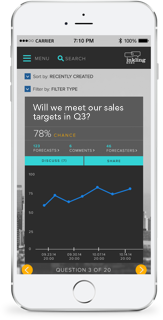
This Marketplace is designed to host our Organizational Effectiveness Markets—markets to help us, our partners, and our peer organizations identify most promising practices, growing interest, and high need areas for institutions and capacity building across the development sector.
Interesting that the speaker sees the IXC model as “expensive.” I’ve never understood why IXC persists in trying to sell what it does as a service. IXC...
RSS stands for "Rich Site Summary," a format for delivering regularly changing web content. Organizational Effectiveness Marketplace allow you to subscribe to content as an RSS "Feed" so when there is something new to tell you, it's automatically sent, much like getting an email.
For example, RSS is being used on Organizational Effectiveness Marketplace so you can be kept up to date on new markets, markets that are closing soon, price changes, etc. without having to always come to the marketplace.
To read an RSS feed, you need something called an "RSS Reader." Many browsers like Firefox, Internet Explorer 7, and Safari have RSS readers built in. You can also download an RSS reader. To start using an RSS feed, just click on an RSS link and follow the instructions in your browser or copy/paste the URL in to your RSS reader. Once it's saved in your reader, whenever there is an update, it will automatically be sent to you. It's that easy!